
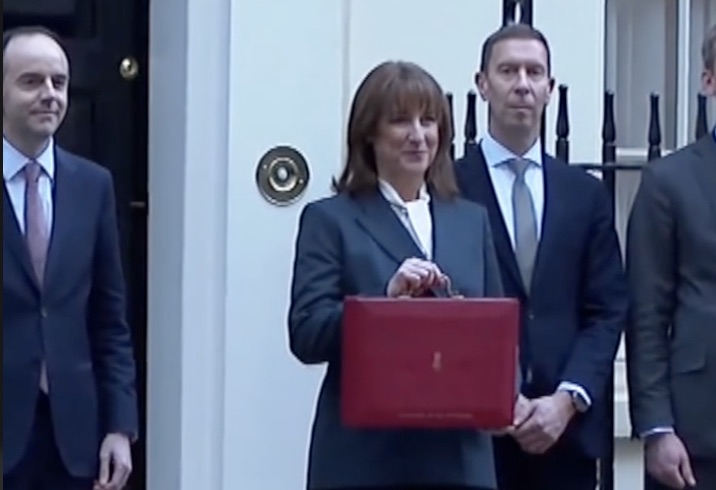
One in three people (30%) are less likely to make financial investments as a result of the measures announced by Chancellor Rachel Reeves in her last Budget, according to a new study.
Less than 1 in 10 (9%) of people said they are more likely to make financial investments following the Budget.
Older investors were much more likely to be more cautious about investments than their younger counterparts, according to the research by IFA Continuum.
Almost half (42%) of those over the age of 65 said they were less likely to make financial investments as a result of the Budget, in comparison to just 15% of those between the ages of 18 and 24.

Source: Continuum
Political affiliation was one of the main predictors of whether people were likely to invest more following the Budget with Tories and Reform voters most likely to be planning to cut back on their investments.
Two-fifths, 41%, of those who voted for the parties in the 2024 election said they are less likely to invest while a quarter of Labour voters (23%) said they are less likely to invest, followed by 21% of Liberal Democrat voters and 20% of Green Party voters.
Those who voted Leave in the 2016 EU Referendum were much more likely (40%) to invest less following the Budget, in comparison to 26% of those who voted to remain.
Martin Brown, managing partner at Continuum, said: “Many people feel uncertain about investing or don’t know where to start. That is exactly where good independent financial advice can make the greatest difference.
“In periods of policy change, disciplined long-term planning becomes even more important. Investors who pause decisions based on headlines risk missing long-term opportunities.”
He said as we move towards the end of the tax year, many people could benefit from investing more rather than less to make the most of the changes to tax rules, allowances and the constantly evolving financial markets.
Northern Irish investors (40%) were among those least likely to invest following the Budget, with the English being the most likely to plan on investing more (9%).
• Research figures based on YouGov survey of 2,181 adults in the UK on behalf of Continuum between 1 and 2 December 2025.