
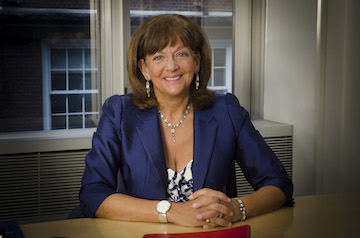
Government plans to bring forward the rise in State Pension age to 68 by seven years will hit the poorest and most vulnerable older citizens, former Pensions Minister Baroness Ros Altmann has warned.
According to an Office for Budget Responsibility report published the week, the government is likely to bring a planned rise in the State Pension age to 68 forward by at least seven years.
The move will mean that millions of people will have to wait longer for their State Pension if the planned increase in the State Pension age to 68 in 2044 is brought forward to 2037, just over a decade from now.
Baroness Altmann said that raising the State Pension starting age was an "easy option" for policymakers but a blunt cost-cutting tool and could harm millions. She is concerned that chronological age is too "inflexible" to be used as a starting State Pension age and does not predict fitness to work.
She added that the move would mean more older people will be "plunged into poverty" because a 20 year differential in health life expectancy among the population means the poorer may be unable to work for longer until their State Pension kicks but the better off will be fine.
She suggested increasing the number of years required for a State Pension to 45 would be a better cost cutting measure along with reform of the Triple Lock to reduce its cost.
She said: "Just raising the State Pension starting age is the easy option for policymakers, but is a blunt cost-cutting tool. Increasing State Pension age hits the poorest and least healthy hardest, while the better off are relatively unaffected. Indeed, if they are healthy and wealthy enough to wait longer, they can get an even higher state pension at older ages.
"The proposal also pre-empts the independent State Pension Age review. The Review has not yet reported, but the Government has apparently told the OBR it plans to bring forward the currently planned increase in State Pension Age by at least seven years. Instead of rising to 68 by 2046, the Budget forecasts will assume this increase occurs in the 2030s instead."
"More older citizens will be plunged into poverty. Just putting up the state pension age is of course the easiest policy choice, the public cost reductions mostly come from curtailing payments to citizens who are least well off and are at risk of being plunged into poverty before reaching the starting age.
"The rise from 65 to 66 increased poverty for 65-year olds forced to wait longer. IFS research showed one in four 65-year olds in poverty. https://ifs.org.uk/news/latest-increase-state-pension-age-65-66-led-income-poverty-rates-among-65-year-olds-more
"Chronological age is too inflexible as a unique criterion for starting State Pension payments and does not reflect fitness to work. People cannot get a penny of state pension before the ever rising age, which is based on rising ‘average’ life expectancy.
"But life expectancy varies hugely across the country and across social groups, while many people either cannot work to their late-sixties, or face ageism in the workplace which prevents them from working. There needs to be more flexibility for early pension payment to those who genuinely cannot work."
"Raising State Pension Age will increasingly skew State Pension spending towards better off older people at the expense of least well-off groups. Favouring the healthiest and wealthiest groups, most of whom will have a private savings or pensions to live on, is not right. There are much better, fairer ways to control State Pension spending."
Financial Planning Today Analysis: Baroness Altmann, a former Pensions Minister, has raised some serious concerns about State Pension age changes and these have been shared by many this week. The OBR report seems to have 'slipped out' a very significant change to the State Pension Age. The age for the State Pension starting to pay out was due to rise to 68 from 2044 but this could now be brought forward to 2037, seven years earlier. If it goes ahead, it means that in just over 10 years time many will be heading for 70 by the time they collect their first State Pension. With signs that the rise in life expectancy is tailing off and serious concerns about fairness, raised by Baroness Altmann, the government, which needs to balance the books, of course, may need to think again. However, with the seemingly inexorable rise in benefit and welfare costs (including pensions) the room for manoeuvre may be limited. More radical pension reform may be necessary but must be fair and proportionate, the experts say. Reviews such as the Pensions Commission are under way and should allowed to deliberate before any decisions are taken.