
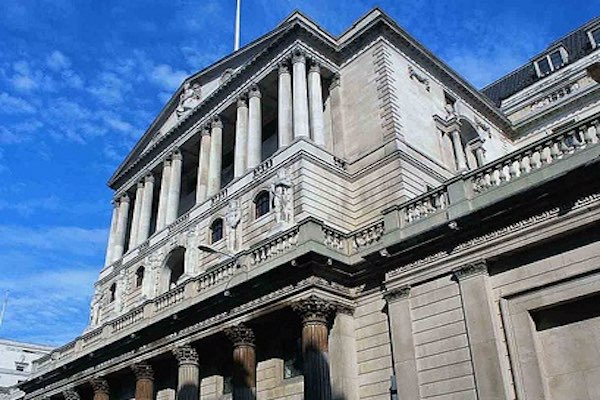
The Bank of England’s Monetary Policy Committee (MPC) has voted 6-3 to maintain the base rate at 3.75% today in a widely expected decision.
Three of the nine MPC members voted at the base rate review to increase the rate by 0.25 percentage points to 4%.
The base rate has now been held at 3.75% for the sixth time in a row.
In its report today the MPC said: "There has been little evidence so far of material second-round effects in price and wage-setting. However, the risk of such effects, against which policy needs to lean, is greater the longer higher energy prices persist or are more volatile. Activity has been slightly stronger than expected, although soft labour market conditions, and the higher interest rates faced by households and businesses since the conflict began, will act to reduce inflation over time.
"Overall, the Committee judges that the risks to the inflation outlook are tilted to the upside, and more so than at the time of the July Monetary Policy Report, although there remains scope for the outlook to change materially as events in the Middle East unfold."
The MPC reiterated that it would continue to act to ensure that CPI inflation remained on track to meet the Bank's long term 2% target in the medium term.
Whilst the decision was widely expected, there had been some speculation that a rise in the base rates would be on the cards following a rise in inflation this summer.
CPI inflation jumped from 2.9% to 3.1% for the year to August, according to the latest inflation data from the Office for National Statistics.
Many experts still believe that a rise in the base rate could be on the cards in the autumn.
William Marshall, CIO of wealth manager Hymans Robertson Investment Services said: “Given recent increases in oil and gas markets, we now believe inflation could easily top 4% in early 2027. However, the key thing for the Bank of England is whether this energy-driven inflationary burst will lead to second-round effects, like we saw in 2022. At present, this is not apparent in the data, given core inflation has been stuck at 2.6% since May. In addition, the labour market remains loose compared to the last few years. Unemployment is moderately high at 4.9% while private sector regular wage growth is low at only 2.9%. All this means we are far less likely to experience the wage-price spiral dynamics of 2022.
"That being said, if headline inflation does approach close to 4.5% the MPC may feel compelled to act to retain credibility, especially if other central banks, like the Federal Reserve and the ECB, continue to hike themselves.”
David Rees, head of global economics at Schroders said the Bank is making the right choice by considering UK economic fundementals over market pressure.
He said: "The Bank was right to hold rates today. The markets may be building a case for an autumn hike, particularly if other central banks are tightening, but monetary policy should be guided by the fundamentals of the UK economy rather than global optics.
"Domestically generated inflation is contained, wage growth is decelerating and unemployment near 5% points to meaningful slack in the labour market. This is not an economy crying out for higher rates.
"The bigger risk lies with fiscal policy. October’s Budget will be crucial. A spending splurge could revive domestic price pressures and bring forward rate hikes, but the strain already visible in gilt markets should make an inflationary fiscal expansion less likely. For now, the Bank has room to look through a temporary energy-led rise in headline inflation."