
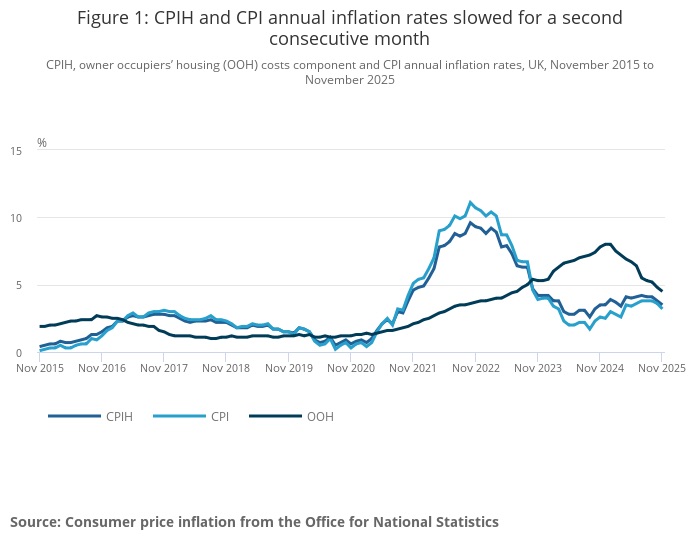
The Consumer Prices Index (CPI), the UK’s main measure of inflation, rose by 3.2% in the 12 months to November, down from 3.6% in the 12 months to October.
On a monthly basis, CPI fell by 0.2% in November, compared with a rise of 0.1% in November 2024.
The November CPI drop was bigger than expected with some experts expecting a fall in the CPI 12 month rate to only 3.5% from 3.6% rate recorded in October.
ONS said that food and non-alcoholic beverages, as well as alcohol and tobacco prices, made the largest downward contributions to the monthly change in both CPIH and CPI annual rates.
CPIH, the Consumer Prices Index including owner occupiers' housing costs, rose 3.5% in the 12 months to November, down from 3.8% in the 12 months to October. On a monthly basis, CPIH fell by 0.1% in November, compared with a rise of 0.2% in November 2024.
Core CPIH (CPIH excluding energy, food, alcohol and tobacco) rose 3.5% in the 12 months to November 2025, down from 3.7% in the 12 months to October while the CPIH goods annual rate slowed from 2.6% to 2.1% with the CPIH services annual rate dipping slightly from 4.6% to 4.5%.
Core CPI (CPI excluding energy, food, alcohol and tobacco) rose by 3.2% in the 12 months to November 2025, down from 3.4% in the 12 months to October. The CPI goods annual rate slowed from 2.6% to 2.1%, while the CPI services annual rate eased slightly from 4.5% to 4.4%.
The Retail Prices Index, the older measure of inflation still used by some providers and suppliers, was 3.8% in November, down from 4.3% in October.
Reaction to the drop inflation was generally positive with some caution about the state of the economy generally.
Lindsay James, investment strategist at wealth manager and platform Quilter, said: “With Christmas right around the corner, consumers are still having to contend with the UK’s inflation problem just as the shopping list grows and hosting duties commence.
"Whilst UK inflation may have fallen to 3.2%, down from 3.6%, a decent fall compared to last month, the UK continues to be an outlier compared to European peers. There is little Christmas cheer as inflation remains well above the Bank of England’s 2% target while economic growth grinds to a halt.
“The good news is that energy costs have stabilised compared to last year and are likely to fall further as providers promise to pass on the £150 saving by moving some levies to general taxation. A weaker economy combined with earlier policy measures has also dampened wage growth, a key input into service inflation which has fallen slightly to 4.4%."
Luke Bartholomew, deputy chief economist, at Aberdeen said: "The sharp drop in inflation in November means that a cut in Bank Rate tomorrow is all but certain.
"While the vote might still be close, it is not very hard to see where a majority comes from to keep policy on hold, especially given the softening of food inflation in this report, given the importance some policymakers have placed on food prices as a driver of household inflation expectations.
"Inflation is set to fall further next year due to mechanical base effects and policy announcements in the recent Budget. This should keep rates falling through 2026, after the cut this week."