
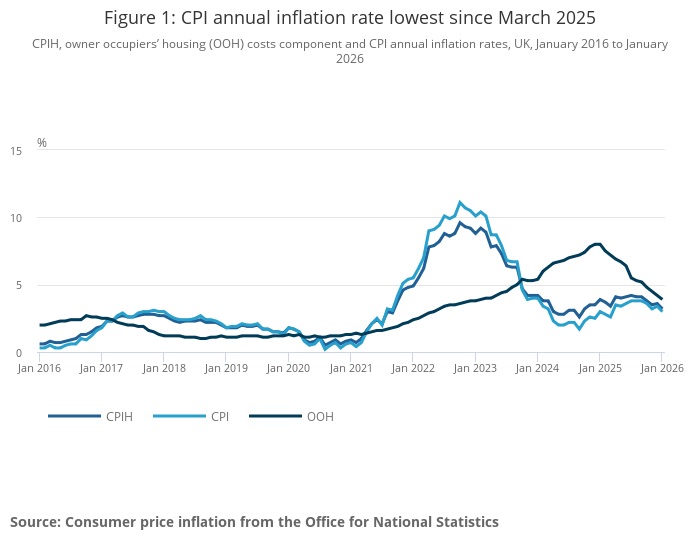
The Consumer Prices Index (CPI), the UK's main measure of inflation, rose by 3% in the 12 months to January, down sharply from 3.4% in the 12 months to December 2025.
ONS said today that on a monthly basis, CPI fell by 0.5% in January, compared with a fall of 0.1% in January 2025.
CPI inflation is at its lowest level since March last year.
The news was welcomed by industry experts and Chancellor Rachel Reeves after an unexpected spike in inflation last month pushed up CPI to 3.4% - blamed on higher pre-Christmas prices, particularly for air fares, alcohol and tobacco.
The latest inflation figures will provide reassurance for the government that inflation is coming under control although CPI remains well above the Bank of England's long-term 2% target.
The sister Consumer Prices Index including owner occupiers' housing costs (CPIH) rose 3.2% in the 12 months to January, down from 3.6% in the 12 months to December 2025.
ONS said that transport and food and non-alcoholic beverages made the largest downward contributions to the monthly change in both CPIH and CPI annual rates in January.
Core CPIH (CPIH excluding energy, food, alcohol and tobacco) rose 3.3% in the 12 months to January 2026, down from 3.5% in the 12 months to December. The CPIH goods annual rate fell from 2.2% to 1.6%, while the CPIH services annual rate fell from 4.5% to 4.3%.
Core CPI (CPI excluding energy, food, alcohol and tobacco) rose 3.1% in the 12 months to January, down from 3.2% in the 12 months to December. The CPI goods annual rate fell from 2.2% to 1.6%, while the CPI services annual rate fell from 4.5% to 4.4%.
RPI, the older measure of inflation, fell from 4.2% in December to 3.8% in January.
Reaction to the drop was generally positive, with many tipping a base rate cut as now on the cards.
Chancellor Rachel Reeves said: “Thanks to the choices we made at the Budget we are bringing inflation down, with £150 off energy bills, a freeze in rail fares for the first time in 30 years and prescription fees frozen again. Our economic plan is the right one, to cut the cost of living, cut the national debt, and create the conditions for growth and investment in every part of the country.”
Jonathan Raymond, investment manager at Quilter Cheviot, said: “Hot on the heels of yesterday’s dire UK labour market print, this morning’s inflation data will be a welcome relief.
"Headline CPI came in at 3% in the 12 months to January, down from 3.4% previously, with a monthly fall of 0.5%. Core inflation – which strips out energy, food, alcohol and tobacco - fell to 3.1%, slightly ahead of expectations of 3% but a good sign of softening nonetheless. This brings inflation to its lowest level since March last year and makes the Bank of England’s forecast of a sharp return to target over the coming months seem much more achievable."
“As the economy barely kept afloat towards the end of last year, and the labour market and wage growth have cooled considerably, the Bank will likely feel increasingly comfortable cutting rates as 2026 progresses. Many economists expect a 0.25% reduction next month, followed by another later in the year."
Mike Ambery, retirement savings director at Standard Life, said: “With the Bank of England choosing to hold rates at its most recent meeting, today’s figure – along with yesterday’s labour market data, which highlighted a rise in unemployment alongside a slowdown in wage growth - strengthens the case for a cut in March. This comes particularly against the backdrop of subdued economic growth, with GDP expanding by just 0.1% in the final quarter of last year. However, inflation remains above the 2% target and policymakers are likely to want confidence that the improvement is sustained before moving more quickly."
Scott Gardner, investment strategist at JP Morgan Personal Investing, said: “Prices are clearly moving in the right direction, with closely watched core and services inflation continuing their downward trend from previous months.
“In theory, this fall in inflation could signal a rate cut from the Bank of England at its March meeting barring any surprises between now and then. The progress made on the inflation front over recent months and clear cooling in the jobs market could encourage policymakers to cut interest rates for a seventh quarter in a row. With that said, the Bank of England will remain vigilant as services inflation remains elevated."