
The conflict in the Middle East has been blamed for a fall in UK GDP in April by 0.1%.
Industry experts say the figure is disappointing but not unexpected. Many say they are wary about the future direction of GDP as uncertainty about the conflict persists.
Monthly GDP contracted by 0.1% in April, following growth of 0.3% in March and 0.4% in February.
The fall in GDP was driven by a 0.2% fall in services, partially offset by a 0.1% rise in construction. Production showed no growth.
ONS, which produces the figures, said real Gross Domestic Product (GDP) in the three month period to April grew by 0.7%, following growth of 0.6% in the three months to March and growth of 0.5% in the three months to February. Services output in the period grew by 0.8% after also growing by 0.8% in the three months to March.
Stuart Clark, portfolio manager at Quilter, said: “The effects of the conflict in the Middle East are now well and truly showing up in the economic data, and it isn’t pretty reading for the UK. After a surprisingly robust first quarter, April has seen GDP shrink by 0.1% as households and businesses alike have tightened their belts in the face of increasing costs and postponements of sporting events in the Middle East saw the services sector contract consequently.
“While the three-month growth has held up, the first quarter of the year is looking very much like a false dawn, and with repeated resolutions between the US and Iran failing to pass, conditions are going to remain tough for longer still.
“We expect the economy to continue to fade as the year goes on, and particularly for as long as there is no lasting peace deal in the Middle East. Even if a deal is to materialise, costs have increased and are unlikely to come back down to levels seen prior to the conflict, and as such growth will be constrained regardless. With higher energy costs hitting businesses, and a rise in the energy price cap looming for households, growth is likely to grind to a halt once again.
“This is making the job of the Bank of England incredibly difficult. With a stagflationary feel to the economy, the last thing it wants to be doing is to raise interest rates, but that is what is being priced in as inflation remains the bigger concern for now.”
Luke Bartholomew, deputy chief economist, at Aberdeen, said: “After March’s surprisingly strong GDP data, some pullback in April was always likely. And the series is very volatile month to month. But the 0.1% contraction in April is consistent with other data which suggest the economy slowing sharply going into Q2 and that recession risks are elevated.
"That economic weakness helps explain why the Bank of England is very unlikely to follow the ECB’s decision to hike at its meeting next week, and we expect rates to remain on hold for the rest of the year.”
Scott Gardner, investment strategist at JP Morgan Personal Investing said: “After a strong first quarter, April has delivered a reality check for the UK economy as activity contracted slightly. This is a cautionary reminder that economic momentum can be easily won and lost as early signs suggest that the recent energy price spike is negatively impacting households and firms.”
Derrick Dunne, CEO of YOU Asset Management, said: “This set of figures is in line with most expectations and shows some signs of healthy growth in the UK economy. There is a significant caveat, however.
“The April data shows some of the effects of the Middle East crisis feeding through into curtailing growth and economic confidence. The monthly figures should be taken with a heavy pinch of salt as they’re always volatile and liable to revision – but this could be the high-watermark for solid economic growth this year.
“Rising energy prices will curtail this growth and potentially feed inflation – or at least put a floor under current expectations. With the Bank of England keeping its powder dry, the situation is finely balanced.”
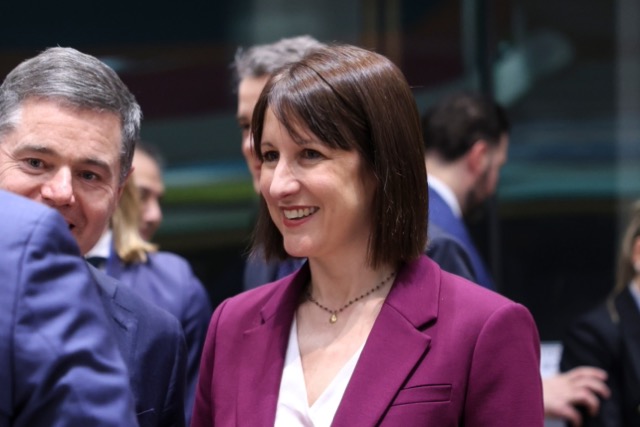
Chancellor of the Exchequer Rachel Reeves, said: “Before the conflict in the Middle East, growth was higher than expected and inflation was falling. This is not a war we wanted or joined, but one that will have an impact at home.
“Our economic plan is the right one, with both the IMF and OECD upgrading their forecasts for growth recently. The choices I have made as Chancellor mean our economy is in a stronger position to deal with the costs of the war, and we are getting on with the job of building a stronger and more secure economy.”