
The gender ISA gap held steady at £2,999 in 2023/4 (2022/3: £3,119), according to annual ISA statistics from HMRC.
The average ISA holding for men was £39,370 in 2023/24, compared to £36,371 for women
The gap rises as women go through their working lives, hitting more than £5,000 by the age of 60-62 years old, according to analysis of the data by platform AJ Bell.
Under the age of 24, women held £876 more in their ISAs on average than men. Men overtake by the age of 27-29, when they have £2,761 more than women.
The 2023/24 tax year is the latest year for which the breakdown in age and sex is available.
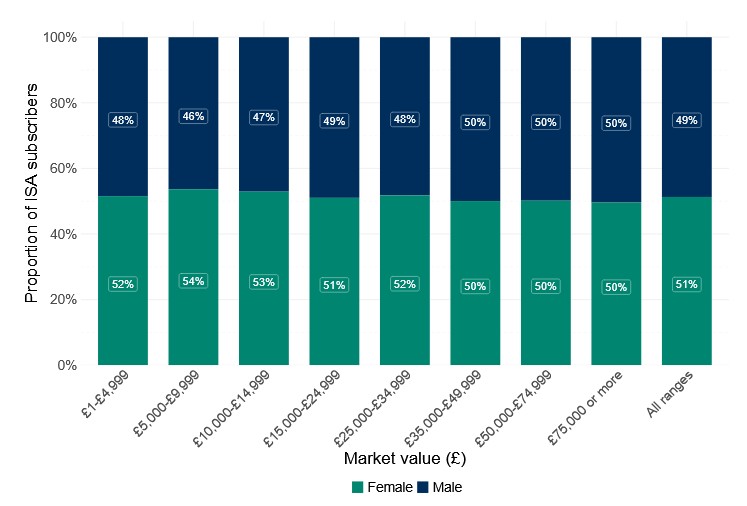
Chart: ISA holdings by age range and ISA market value 2023/24

Source: HMRC Commentary for Annual savings statistics: 16 September 2026
Overall, women held just over half of all ISAs (51%) in 2023/4. Over 11.8m ISA holders were women, compared with 11.2m men.
AJ Bell attributes much of the gap to a greater reliance on Cash ISAs.
Women paid into 54% of Cash ISAs in comparison to 41% of Stocks & Shares ISAs in 2023/4.
Sarah Coles, head of personal finance at AJ Bell, said: “Given the fact that over time, investing tends to produce better returns than cash, it’s no surprise that men are building bigger ISAs.
“In the 2023/24 tax year this will have had slightly less impact, because savings rates were riding high. It’s why, during the year, the gender ISA gap narrowed very slightly from £3,119 in 2022/23 to £2,999 in 2023/24. However, this is likely to be a blip rather than a change of direction, because now savings rates are lower and being outpaced by investments, it’s highly likely to widen again.”