
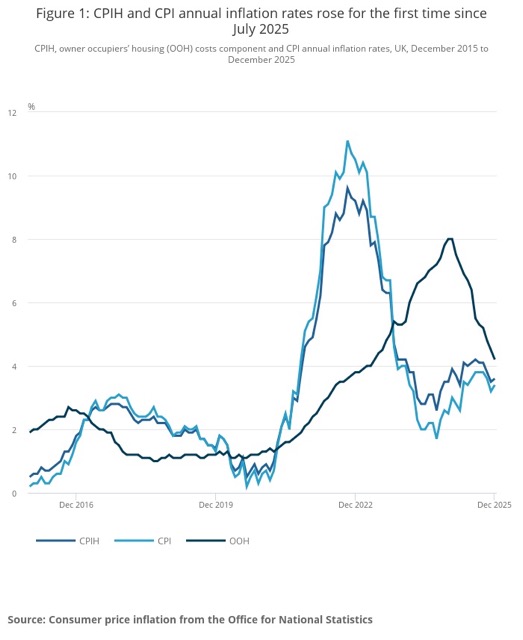
The CPI 12 month inflation rate rose in December to 3.4% from 3.2% in November, ONS reported today.
The rise was blamed mainly on higher pre-Christmas prices, particularly for air fares, alcohol and tobacco.
The rise suggests the government and Bank of England are finding it difficult to push inflation down to the 2% long term target.
On a monthly basis, CPI rose by 0.4% in December, compared with a rise of 0.3% in December 2024.
ONS said the CPIH and CPI annual inflation rates rose for the first time since July.
ONS added that alcohol, tobacco and transport made the largest upward contributions to the monthly change in both the CPIH and CPI annual rates.
Core CPIH (CPIH excluding energy, food, alcohol and tobacco) rose by 3.5% in the 12 months to December 2025, the same rate as the 12 months to November. The CPIH goods annual rate rose from 2.1% to 2.2%, while the CPIH services annual rate remained at 4.5%.
Core CPI (CPI excluding energy, food, alcohol and tobacco) rose by 3.2% in the 12 months to December, the same rate as the 12 months rate to November. The CPI goods annual rate rose from 2.1% to 2.2%, while the CPI services annual rate rose from 4.4% to 4.5%.
The annual RPI inflation rate, the older measure of inflation still used by many providers, was 4.2% in December (3.8% in Nov).
Most experts said they expected the rise to be a temporary blip in inflation, with a downward trend likely to resume.
Sarah Coles, head of personal finance at platform Hargreaves Lansdown, said: "Like the best kind of seasonal weight gain, the bump in inflation in December is likely to be a short-lived phenomenon, and it’s expected to drop again in January. It means these figures are unlikely to have much impact on the Bank of England’s rate cutting decisions.
"In more normal times, the seasonal inflationary blip, would be unlikely to steer the Bank from a rate-cutting path. Likewise, the easing of wage inflation revealed yesterday would typically add fuel to the fire for a cut – alongside sluggish GDP growth. However, these are far from normal times. There’s the risk of interruptions to global supply chains and increased trade tariffs, which could add more inflationary pressure in the coming months. It means the market isn’t expecting a cut until April."
Adam Gillespie, partner at pensions firm XPS Group said: "UK CPI inflation for the 12 months to December has increased to 3.4% reversing the direction of travel after two months of falls. While an inflation uptick was widely expected, today’s increase will be unwelcome news for households and businesses, and a setback for the Government’s disinflation ambitions. December data can be volatile, but this release is a stark reminder of just how much work remains to bring inflation towards the Bank of England's 2% target."
Charlie Ambler, co-chief investment officer and partner at wealth manager Saltus, said: “Headline inflation has edged higher this month, driven by seasonal pressures in travel and food prices over the festive period. Although markets will be unlikely to respond well, with the Bank of England previously signalling inflation would follow a downward trajectory this year, it does not signal a renewed problem in itself.
“Policy remains finely balanced. The Bank’s ability to continue easing hinges on controlling services inflation and wage growth, rather than short term volatility in headline numbers. December’s rate cut signalled growing confidence that underlying pressures are cooling, and the fiscal tightening announced in the Autumn Budget should reinforce that disinflationary impulse over time. Near term rises in inflation are therefore more likely to be treated as noise as opposed to a change in direction."
Sarah Pennells, consumer finance specialist at Royal London, said: “For many households, this will be unwelcome news to kick off the New Year, and for those who’ve not yet had their January payday, the financial hangover from Christmas might still be very real. The cost of daily essentials creeping up yet again, and money needing to stretch just that little bit more, has put a particular spotlight on food price inflation, which continues to hit families hard. It’s a reminder that, while inflation is discussed in percentage points and economic forecasts, the real impact is felt every time we do the weekly shop or pay our household bills."
Financial Planning Today Analysis: Chancellor Rachel Reeves will be disappointed by today's figures which suggests that inflation remains sticky and there is much more to do to bring it down. It pushes back any chance of further base rate reductions. However, it's not panic stations. The rise is modest and the medium term trend remains downwards. Efforts to push down inflation will continue but at present levels it remains a threat to wealth and living standards.